



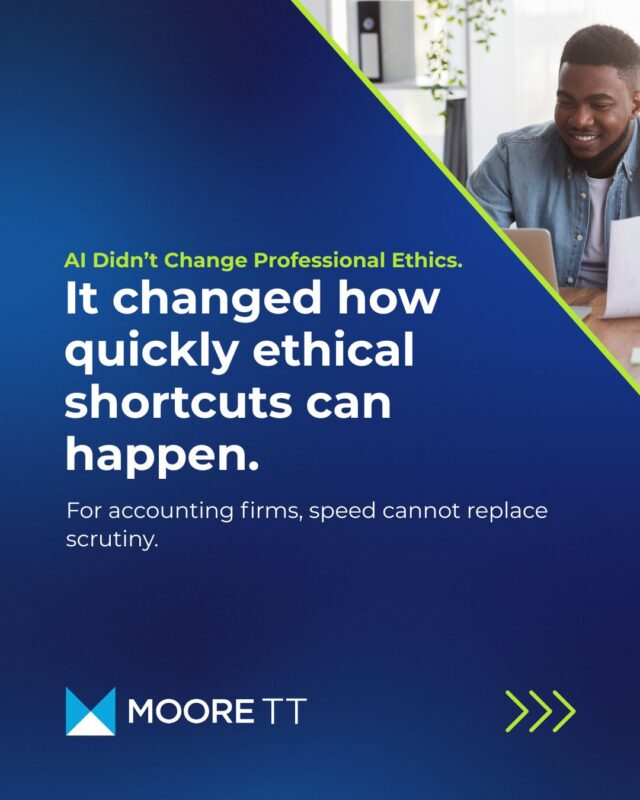
Every technology shift tempts businesses toward shortcuts, and AI is no different. The tools that make work faster also make it easier to skip the scrutiny that used to slow bad decisions down. For firms handling client finances, that’s not a minor risk — it’s the whole business model. Ethics hasn’t changed in principle since AI arrived. What’s changed is how easily those principles can be quietly bypassed.
Here’s a snapshot of how ethical practice has had to evolve.
So, where exactly does the temptation creep in?
- Presenting AI-generated analysis as fully human-reviewed when it wasn’t
- Using AI outputs to justify decisions already made, rather than to inform them
- Skipping disclosure to clients about where AI was used in their engagement
- Letting speed replace scrutiny on judgement calls that matter
Let’s look at a realistic scenario: A firm under deadline pressure uses AI to draft a client risk assessment. It’s accurate on the surface, but a partner signs off without the usual second review. Why? Because “the AI already checked it.” Weeks later, an edge case the tool missed surfaces, and the client asks who reviewed the file. The tool wasn’t the problem. The skipped review was.
How should firms address these issues?
- Set clear disclosure standards for AI use in client work
- Keep human sign-off mandatory on judgement-based decisions
- Build an AI ethics policy before an incident forces one
Ethical practice was never about the tools available — it was always about the standards a firm refuses to compromise.
Does your firm have a clear AI ethics policy yet? If not, what’s holding it back? Let’s chat about it.
| Then | Now |
|---|---|
| Manual review caught most errors by default | AI errors can scale invisibly if unchecked |
| “We didn’t know” was a data gap | It’s now a governance failure |
| Client trust rested on process | Client trust now rests on disclosure and oversight |