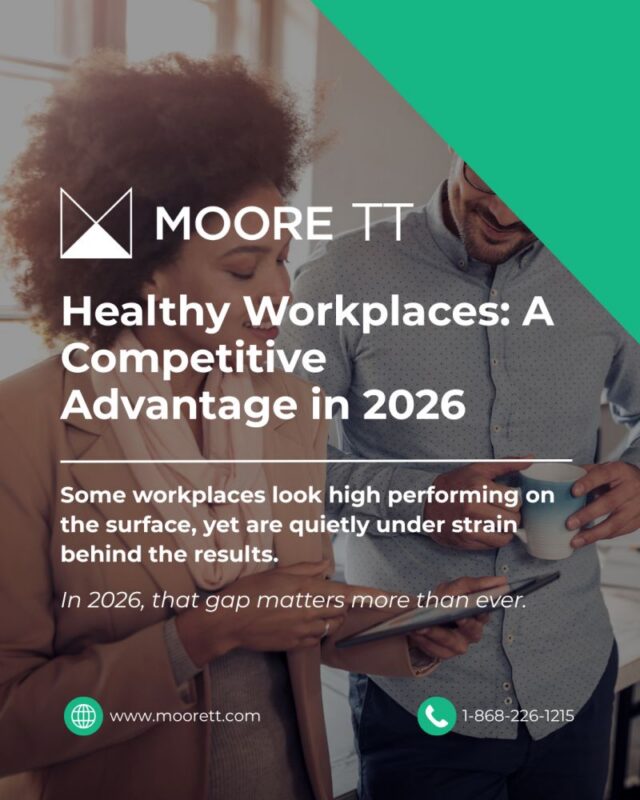


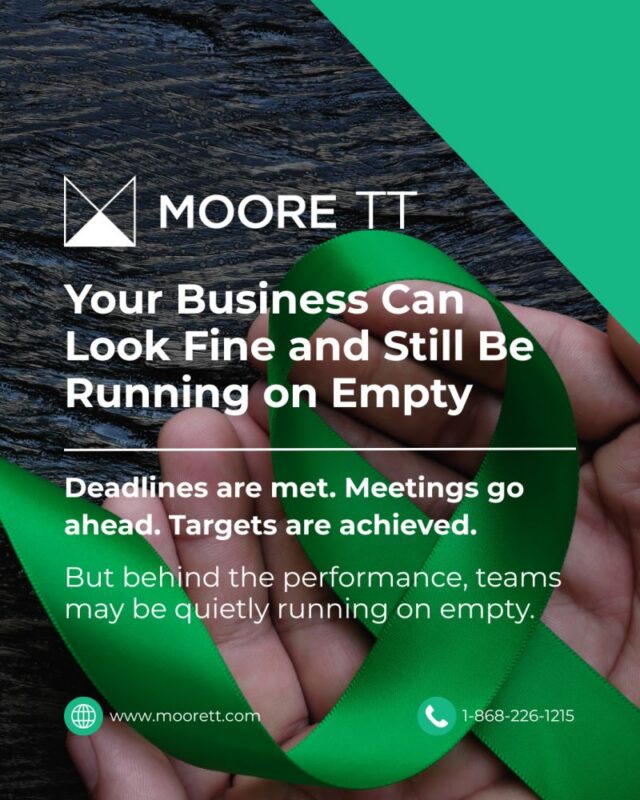
May is Mental Health Month, and at Moore TT, the mental health and wellbeing of our team members are of paramount importance, particularly during the busyness of audit firm seasons. Deadlines may be met. Meetings may go ahead. Targets may still be achieved. But behind the performance, there may be burnout, disengagement, emotional strain and teams running on empty. That is why mental health is not just an HR issue. It is a business issue.
Yes, HR plays an important role in shaping policies, support systems and culture. But mental health cannot sit with HR alone. Leadership, managers and business owners all shape the everyday experience of work — from workload and communication to trust, boundaries and support.
When mental health is overlooked, the warning signs are not always obvious. Sometimes they show up as irritability, withdrawal, low morale, rising absenteeism, poor communication, burnout, disengagement or teams that are functioning, but not flourishing. Sound familiar?
In SMEs, the effects can be even more pronounced. Smaller teams often mean greater pressure, less buffer and fewer formal support systems. When one person is overwhelmed, the strain is often felt across the business.
The good news is that healthier workplaces can be built. It starts with leaders paying attention. Are workloads realistic? Do managers know how to spot early warning signs? Do employees feel safe to speak up? Is overwork being praised as commitment?
HR can help create the framework, but management must help bring it to life. That means better conversations, stronger support, healthier boundaries and a culture where performance does not come at the expense of people.
Strong businesses are not built by ignoring pressure. They are built by recognising that people are at the centre of performance.
At Moore TT, we believe healthier workplaces support stronger teams, better leadership and more sustainable business performance. If your organisation is ready to take a more thoughtful approach to workplace wellbeing, let’s start the conversation.